
Artificial Intelligence
What Are AI Agents? The Next Evolution of Artificial Intelligence
Artificial intelligence is evolving rapidly. Traditional AI systems mainly answer questions, summarize information, or generate content. However, a new generation of intelligent software is emerging. These systems are known as AI agents.
Unlike a standard chatbot, AI agents can plan, make decisions, complete several tasks, and adapt when conditions change. As a result, they may reshape how people work, research, build products, and manage information.
What Is an AI Agent?
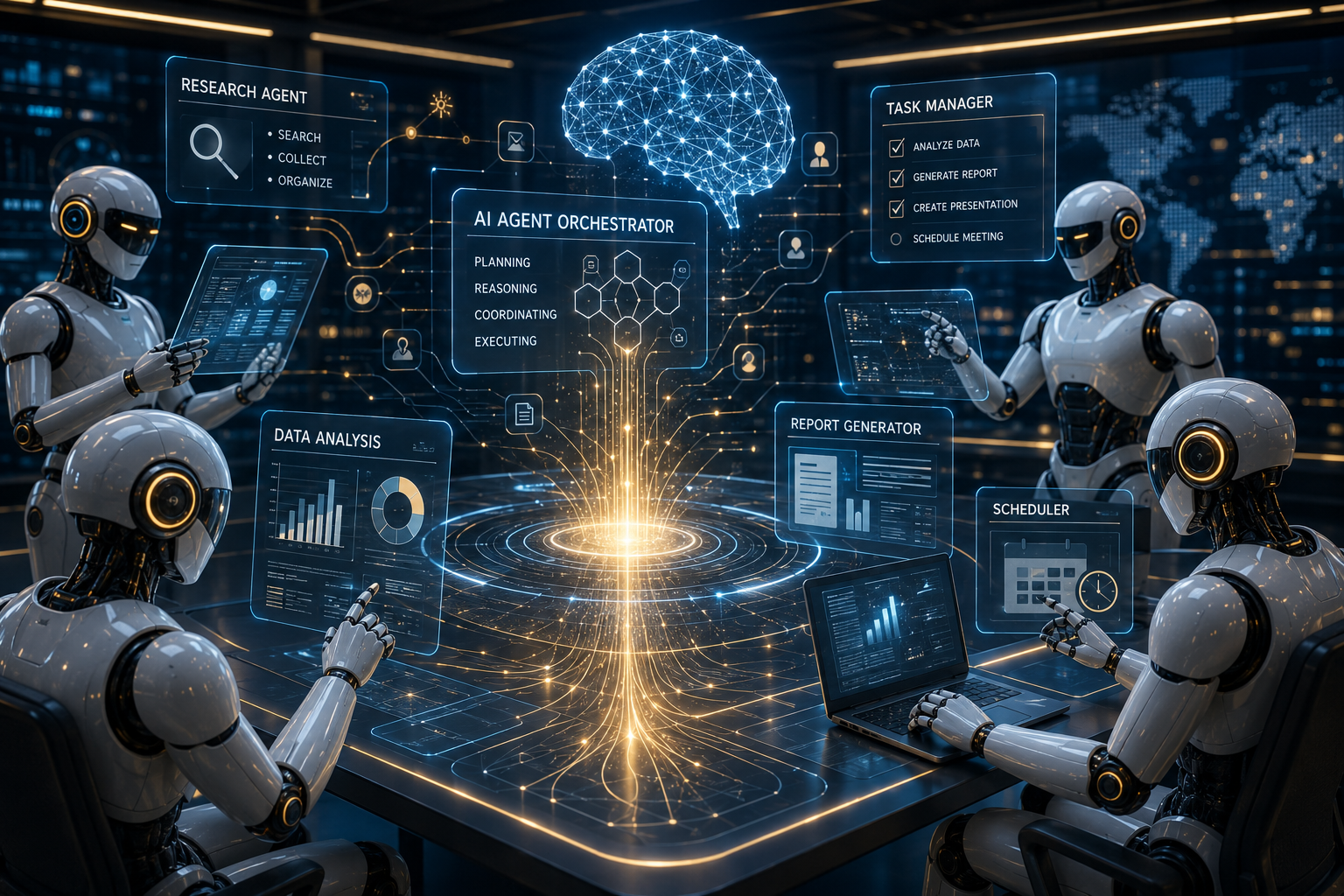
An AI agent is an intelligent software system designed to pursue a goal with a certain level of autonomy. Instead of waiting for every instruction, it can analyze information, plan several steps, use available tools, and review the outcome.
For example, you might ask an AI agent to research a market. It could then:
- Identify relevant competitors
- Collect information from approved sources
- Compare products or services
- Summarize its findings
- Draft a structured report
- Suggest useful follow-up actions
A traditional chatbot may help with each step separately. By contrast, an AI agent may coordinate the wider workflow.

How Do AI Agents Work?
AI agents can be built in different ways. Even so, many follow a similar cycle.
1. Receive a Goal
First, the user or another system provides an objective. For example:
Research recent AI developments and prepare a clear market summary.
2. Build a Plan
Next, the agent divides the objective into smaller tasks. It may decide which information it needs, which tools to use, and what order to follow.
3. Execute Tasks
The agent then carries out the plan. Depending on its permissions, it may search approved databases, analyze documents, write content, update a system, or call another tool.
4. Evaluate the Results
After completing a task, the agent checks whether the result supports the original goal. If something is missing, it may revise the plan.
5. Return or Continue
Finally, the agent delivers the result or continues working until it reaches a defined stopping point.
Why AI Agents Matter
AI agents matter because they can support workflows that involve several connected steps. Therefore, their value goes beyond generating a single answer.
Possible applications include:
- Business process automation
- Software development support
- Scientific research
- Customer service
- Project coordination
- Supply-chain monitoring
- Education and personalized learning
- Data analysis and reporting
In many cases, the goal is not to replace people. Instead, AI agents can handle repetitive work while humans remain responsible for strategy, ethics, creativity, and final decisions.
AI Agents vs. Traditional Chatbots
AI agents and chatbots may use similar underlying technologies. However, they are not always used in the same way.
| Traditional Chatbot | AI Agent |
|---|---|
| Usually responds to one prompt | May pursue a broader objective |
| Often waits for the next instruction | May plan several steps independently |
| Mainly generates information | May use tools and complete actions |
| Limited workflow coordination | Can coordinate connected tasks |
| Usually reactive | Can be more goal-directed |
Still, the boundary is not always fixed. Some advanced assistants include agent-like functions, while some agents operate within tightly controlled limits.
AI Agents and Innovation
One important strength of AI agents is their ability to organize large amounts of information. In addition, they can compare findings across sources and help identify patterns that may be difficult to see manually.
This connects closely with the Bakroe approach to early discovery. The
Bakroe innovation framework
encourages people to observe signals, understand context, evaluate ideas, and decide with clarity.
AI agents may support this process. However, they should not replace careful judgment. Their output still needs to be checked for accuracy, relevance, and bias.
AI Agents and Early Opportunity Discovery
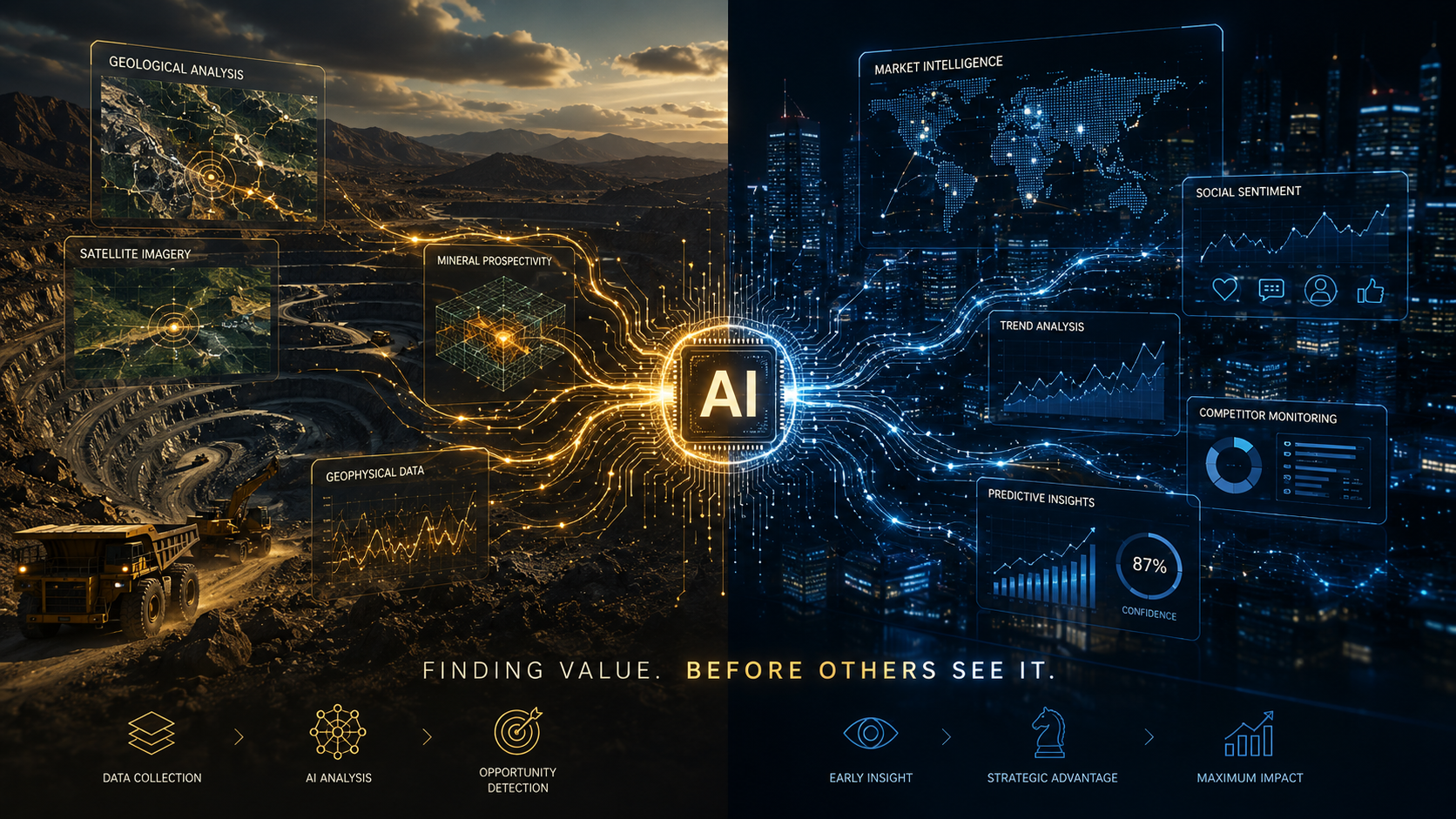
AI systems are increasingly used to detect patterns across scientific, commercial, and technical data. For example, they may support:
- Scientific literature analysis
- Climate and environmental modelling
- Supply-chain risk detection
- Geological exploration
- Technology adoption analysis
- Emerging market research
Bakroe explores a similar discovery mindset in
What Gold Exploration Teaches Us About Discovering Opportunity Early
.
Modern exploration depends on finding meaningful patterns beneath large amounts of data. Likewise, AI agents can help users organize signals before they become obvious.
Potential Benefits of AI Agents
Greater Productivity
AI agents may reduce time spent on repetitive tasks. As a result, people can focus more attention on judgment, creativity, and planning.
Faster Information Processing
An agent can examine large datasets, documents, or records more quickly than a person working manually.
More Consistent Workflows
When rules and limits are defined clearly, agents can follow the same process repeatedly.
Better Coordination
AI agents can connect several tools or tasks within one workflow. Therefore, they may reduce the need to move information manually between systems.
Continuous Availability
Some agents can monitor systems or process routine requests continuously. Nevertheless, important decisions should still include human oversight.
Challenges and Risks
AI agents can be useful, but greater autonomy also creates greater responsibility. Organizations must decide what an agent may access, which actions it may take, and when a human must approve the result.
Incorrect Information
AI systems can produce inaccurate or unsupported conclusions. Therefore, important outputs should be verified.
Privacy and Data Protection
Agents may process sensitive information. Clear access controls and responsible data practices are essential.
Security Risks
An agent connected to external tools may become a security concern if permissions are too broad or instructions are manipulated.
Lack of Transparency
Users should understand what the agent did, which information it used, and why it produced a result.
Overreliance
AI agents should support human decision-making rather than remove accountability from it.
For practical guidance on trustworthy AI systems, readers can explore the
National Institute of Standards and Technology’s artificial intelligence resources
.
What Are Multi-Agent Systems?
A multi-agent system uses several agents that work together. Each agent may have a specialized role.
For example:
- One agent gathers information
- Another checks the quality of the sources
- A third compares possible strategies
- A fourth prepares the final report
In theory, this can make complex workflows more manageable. However, it can also create new challenges. Coordination errors, duplicated work, and unclear accountability must be controlled carefully.
The Future of AI Agents
AI agents may become common digital partners across many industries. They could help people organize work, monitor systems, conduct research, and coordinate information across different tools.
At the same time, the most valuable systems will likely be those that combine capability with trust. Therefore, future AI agents will need clear permissions, strong security, transparent processes, and meaningful human supervision.
Readers who want a broader introduction can also explore
IBM’s overview of AI agents
.
Conclusion
AI agents represent an important step in the evolution of artificial intelligence. Instead of responding only to individual prompts, they can pursue goals, coordinate tasks, use tools, and adapt their plans.
Their greatest value is not simply automation. Rather, it is their ability to help people organize complexity and move from information toward action.
Even so, clarity must come before autonomy. Responsible AI agents need appropriate limits, reliable information, human oversight, and transparent decision-making.
At Bakroe, we believe technology creates lasting value when it supports better understanding—not more noise.
Explore Artificial Intelligence with Clarity
Follow Bakroe for thoughtful explanations of AI, innovation, early discovery, and digital opportunity—without unnecessary hype.
Frequently Asked Questions
What is an AI agent?
An AI agent is intelligent software that can plan, make decisions, use tools, complete tasks, and adapt its actions while working toward a defined goal.
Are AI agents different from chatbots?
Yes. Chatbots usually respond to individual prompts. AI agents may plan workflows, coordinate several tasks, use external tools, and evaluate results.
Where are AI agents used?
AI agents may be used in software development, customer support, scientific research, healthcare, education, data analysis, project management, and business automation.
Will AI agents replace people?
AI agents are more likely to change tasks than replace all human work. They can automate repetitive processes, while people remain responsible for creativity, ethics, strategy, and important decisions.
Are AI agents always autonomous?
No. Autonomy can vary. Some agents work independently within strict limits, while others require human approval before taking important actions.


